
Watt on earth is FTP?
Talking through indoor riding and using FTP as a training tool.
18th Feb | 8-10 minute read
If you’ve spent more than five minutes on cycling Insta, stalking your friend’s Zwift sessions on Strava, or been overwhelmed by the screen of stats on a spin class bike, you’ve probably seen the term ‘FTP’ thrown around like it’s common knowledge.
“Just did an FTP test.”
“Doing some FTP intervals today.”
“My FTP went up 10 watts!”
Sorry… my what??
Don’t worry, you’re not alone. We spent the first couple of years of our triathlon journeys completely oblivious to this jargon. It sounded technical and intimidating. Until we started to understand it, and realised it actually is quite a useful tool to use as a cyclist or triathlete. So let’s break it down.
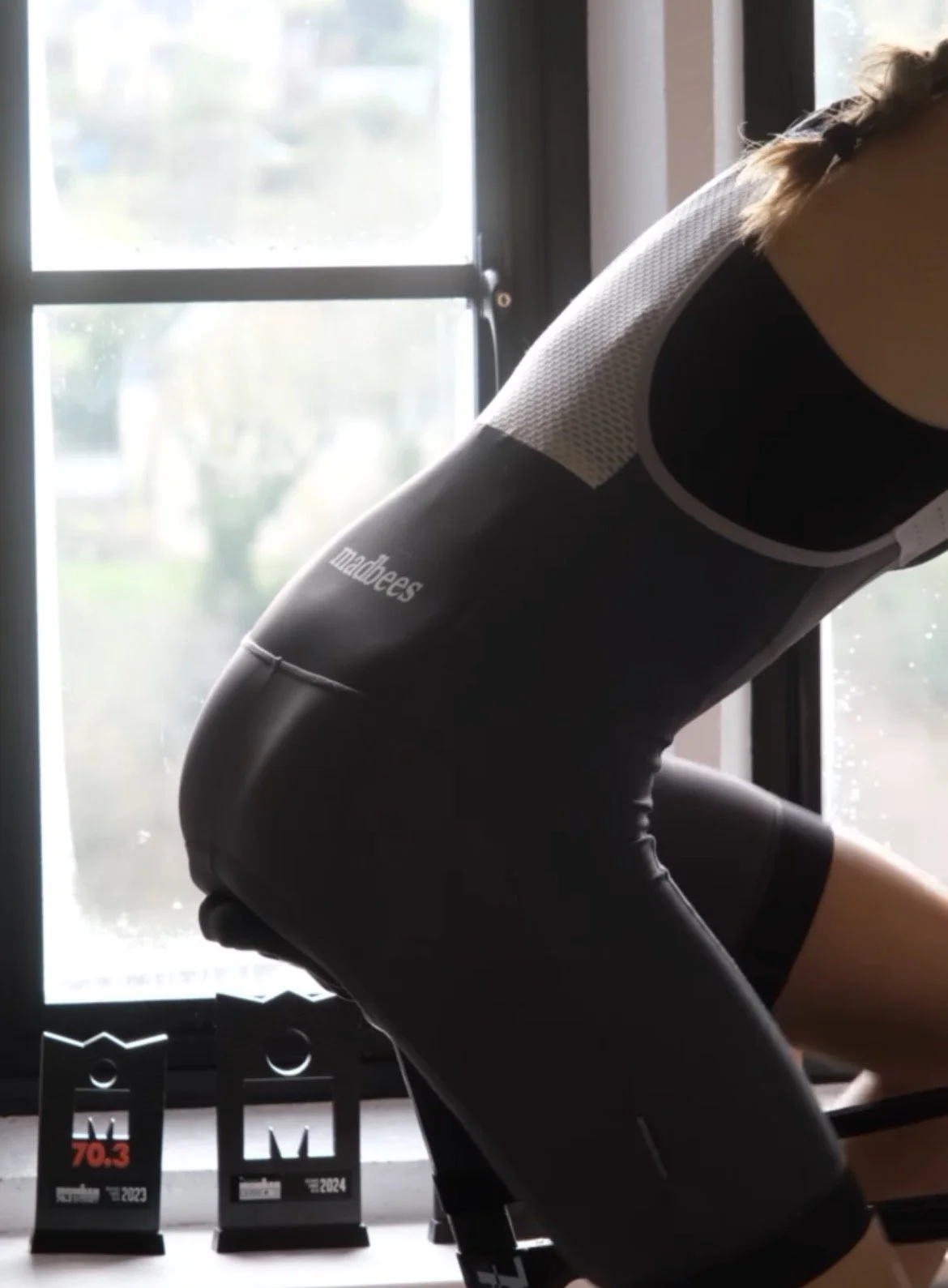
Firstly… indoor training.
Indoor training is simply riding your bike indoors. That can mean:
A smart trainer, or turbo trainer attached to your own bike
A smart bike (like Wahoo KICKR Bike or Wattbike)
Or even the trusty spin bike in your gym
It allows you to ride consistently without worrying about weather, traffic, daylight, or finding a good route. No potholes, no roundabouts, no buses cutting you off. Bliss (kind of).
Why do people love indoor training?
1. It’s efficient
No stopping at lights. No coasting down hills. Every minute counts.
2. It’s safe
Perfect for winter, dark evenings, or anyone who prefers fewer… variables.
3. You can follow structured training easily
Training zones, intervals, cadence targets
Popular indoor training platforms
These apps give you virtual worlds, guided workouts, group rides and even races:
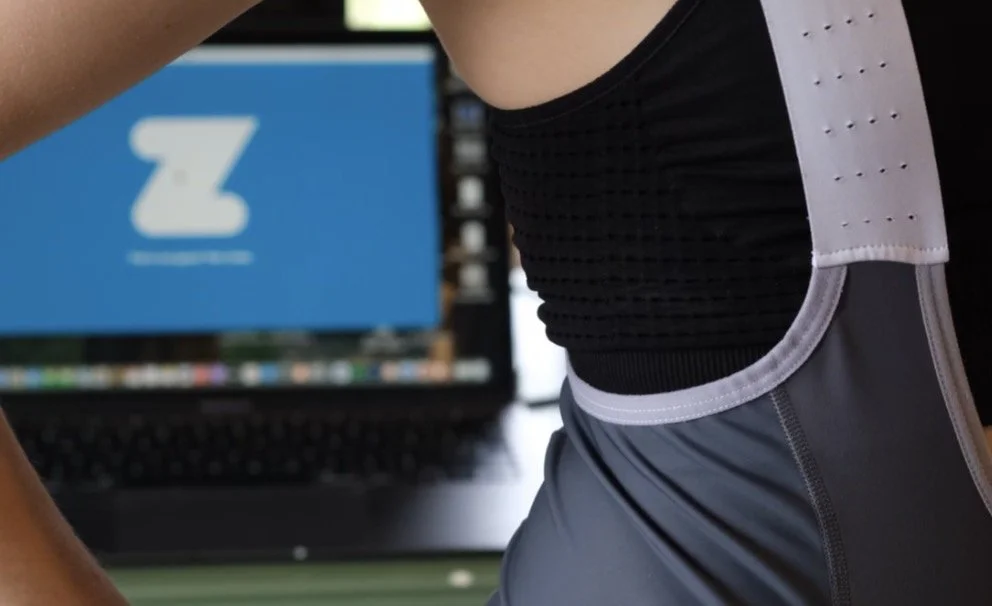
Zwift - colourful virtual worlds, group rides, races, structured training
Rouvy - real‑life video routes, great for testing our real world courses
You don’t need these apps to ride indoors, but they make it a lot more fun and effective.
What you need to set up indoor training with your bike
Smart trainer (direct‑drive or wheel‑on)
Bike + training app
Fan and a towel (trust us)
Okay, now you know why indoor training is everywhere… let’s get into what FTP actually is and why cyclists won’t shut up about it.
What is FTP?
FTP stands for Functional Threshold Power.
In simple terms, it’s the maximum power you can hold for one hour, written as a number in watts.
The higher your FTP (watts), the more power you can produce sustainably. But (and this is very important) FTP is personal. Comparing your number to someone else’s number is completely pointless. If two people have the same FTP, they most likely won’t be the same ‘speed’ at cycling. In theory, a lighter person with a FTP of 150 watts will be faster, compared to a heavier person with the same FTP of 150 watts. They produce more power relative to their weight.
You may have seen the ‘watts per kilo’ phrase flying around. This is very helpful at adding context to an otherwise misconceived number, as it essentially factors in a person's weight. Let’s walk through with examples, Person A and Person B:
Person A is 50kg and has a FTP of 150w. This means their FTP is 3W/kg (150/50=3). They are producing 3 watts per every 1kg of body weight.
Person B is 75kg and has an FTP of 150w. This means their FTP is 2W/kg.They are producing 2 watts per every 1kg of body weight.
So, person A will be faster.
Statistically speaking, due to their body composition and higher muscle-to-fat ratio, men are on average heavier than women, and will therefore (sometimes) have higher FTP’s than women. So don’t worry if the men in the comment section have crazy high FTPs, they could be 6ft6 and weigh more than you (and have a tendency to round numbers up…).
Ok, so now we know what FTP is, the next point we want to stress is that to measure FTP you need access to a power meter. You can put one on your bike (an expensive option!), use indoor training platforms (like zwift, Rouvy) or use the spin bikes in your gym or spin classes. It is completely fine if you don’t use any of these. But feel free to keep reading to learn more about FTP if you want to, though please note we cannot take any responsibility for causing you to spend £££ on a new trainer set up ;)
Where do I test my FTP?
-
Use an indoor trainer with a training platform (Zwift, Rouvy, Trainer Road etc), where there will be FTP tests you can browse through and they will guide you through the test.
-
On your bike (if you have a power meter), but it is often hard to find a stretch of road where you won't be interrupted in 20 minutes at full gas.
-
You can also use a bike in the gym. Make sure to warm up, and then reset the bike before your 20 minute test so you can get your average 20 minute power exactly right. goes here text goes here
How do you test it?
There are a few options below:
-
This is the most common. You can do this on a bike in the gym, on platforms, or outside if you have a power meter on your bike.
How it works:
Warm up properly (this matters more than you think)
Ride as hard as you can sustain for 20 minutes
Note your average power for those 20 minutes
Multiply it by 0.95
That final number ≈ your FTP.
Is it comfortable? No.
Is it effective? Yes. -
AKA less thinking, more pain.
You can only do this on training apps such as Zwift, TrainerRoad, and Wahoo. You start easy, and the power increases every minute until you simply cannot continue.
Pros:
Shorter
Mentally easier
No pacing stress
Cons:
Still hurts (sorry)
Often less accurate
-
(not recommended)
By definition of FTP this is most accurate, but this is very hard mentally and physically. Do yourself a favour and do the 20 minute test instead.
-
If you’re not ready for testing yet, some platforms estimate FTP from your rides.
It isn’t perfect, but it’s a good start.
Why should you actually care about FTP?
Great question. Especially if you’re thinking “I just want to enjoy riding my bike” (same).
1. It makes training smarter, not harder
Training apps (like Zwift, Rouvy) and in most spin classes and gym bikes use FTP to set ‘zones’. That means when a session says “easy” or “hard”, it is personalised to you. Not for a random person. No more going way too hard on “easy” rides or wondering why labelled “hard” sessions feel suspiciously manageable.
2. It helps you track real progress
Weight, hormones and mood fluctuate. Speed depends on elevation, wind, road surface etc. FTP ignores environmental factors. If your FTP goes up, you’re getting fitter. Simple as that. Even if it doesn’t feel like it.
3. It boosts confidence and helps you understand your body
There’s something very empowering about understanding your own numbers and knowing how to pace yourself. FTP helps you ride your ride, not chase someone else’s. You can look at your heart rate or perceived effort, compared to your watts, and over time you will get an idea of what is normal for you. HOWEVER please don't stress about day to day fluctuations , you’ll have days where fatigue, sleep, fueling, phase in your menstrual cycle, illness etc can affect your FTP. Look at the bigger picture and monitor your trends over months.
Do I need an FTP test to be a “real” cyclist?
Absolutely not. FTP is a tool, not a requirement.
That said, if you do have access to a power meter or smart trainer, testing your FTP can be a game-changer.
Finally, a couple of important FTP reminders:
Remember, don't let a 'bad' session get you down. Look at your progress trends over weeks and months.
Having a ‘low’ FTP does not mean you’re bad at cycling. Your 20 minute all-out FTP test doesn’t matter too much when you’re on the bike for 6 hours in an Ironman.
FTP does not define your worth, talent, or place in the community. Don't let insecure men in comment section tell you otherwise
We repeat: FTP is a training tool for you, not a personality trait.
The madbees take:
We use FTP in our training to help us compare our progress over time. Maddy uses an indoor trainer with Zwift, using FTP to structure her workouts. Bea prefers a group setting and often does spin classes, inputting her FTP into the spin bike data screen. BUT we don’t love when numbers suck the joy out of sport. Use FTP to support your journey, not stress you out.
Ride because you love it. Train because it makes you feel strong. Wear kit that makes you feel confident while doing both.
Maddy & Bea
P.S. If you do your first FTP test after reading this, let us know! Find us on Insta @madbeesuk or email us team@madbees.uk <3
